
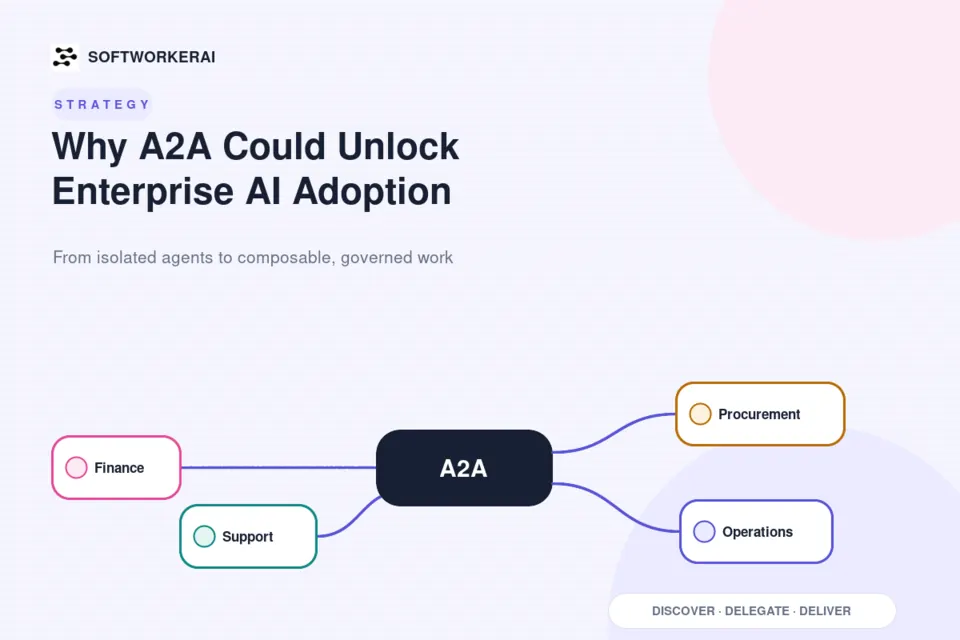
Why A2A Could Unlock the Next Wave of Enterprise AI Adoption
A2A could turn isolated AI agents into a composable enterprise workforce. The value lies in lower integration costs, broader choice, and end-to-end execution.
8 articles on this topic.
A2A could turn isolated AI agents into a composable enterprise workforce. The value lies in lower integration costs, broader choice, and end-to-end execution.
Invoice processing is high volume, rule-bound, and unforgiving of errors. A governed AI agent can read, match, and code invoices while routing every payment decision to a person.
Small teams have the most to gain from AI agents and the least room for a mistake. Governed AI gives a lean business the leverage of automation without giving up oversight.
Expense reports are repetitive, rule-bound, and easy to get wrong. A governed AI agent can read receipts, apply policy, and route the judgment calls to a human, while recording every step.
Support is more than answering questions. A governed AI agent can triage, draft, and resolve routine tickets while keeping a person on refunds, escalations, and anything sensitive.
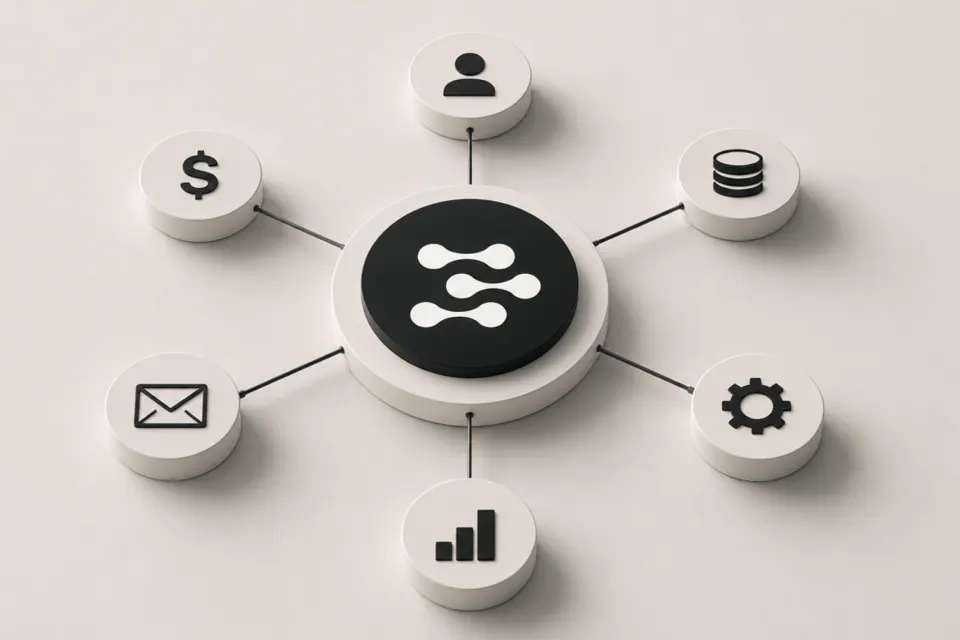
The jump from AI assistance to AI execution is not a model problem alone. It is an operating model problem: who owns the work, what systems can be touched, and how every action is reviewed.
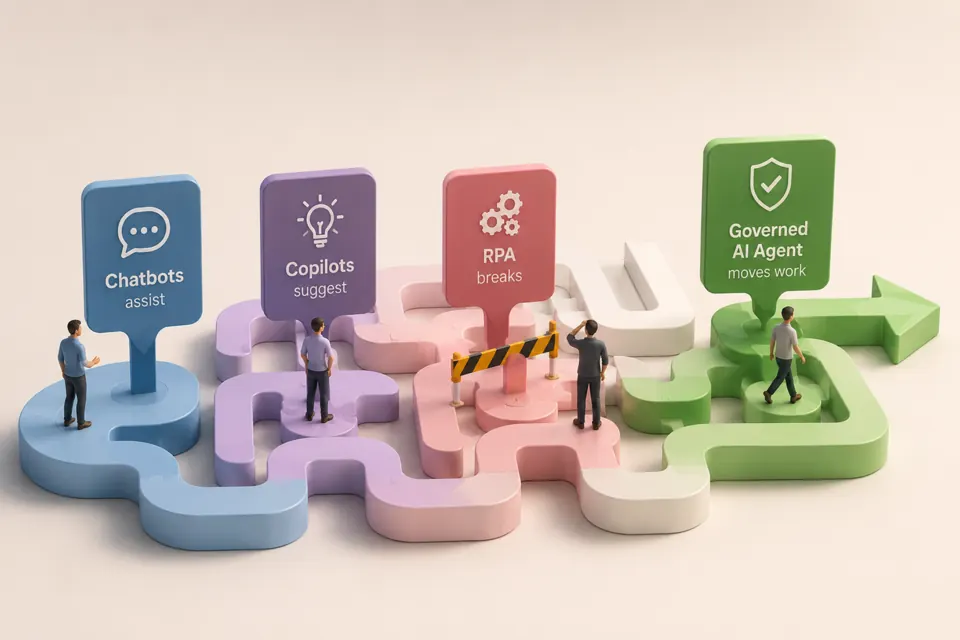
Different AI and automation categories solve different parts of the work problem. The missing category is the governed AI agent that can plan, pause, execute, and produce evidence.
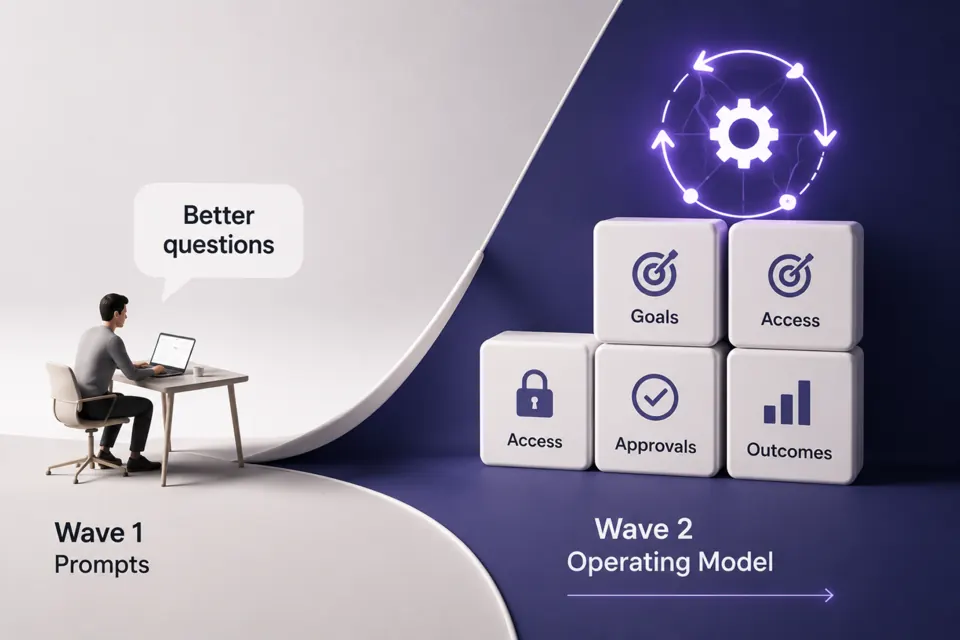
The first wave of AI adoption teaches people how to ask better questions. The next wave asks how goals, access, approvals, and outcomes become a repeatable operating model.